Insurance · 2 min read
Making sense of insurance correspondence
Keep company names, claim numbers, and communications in one place.
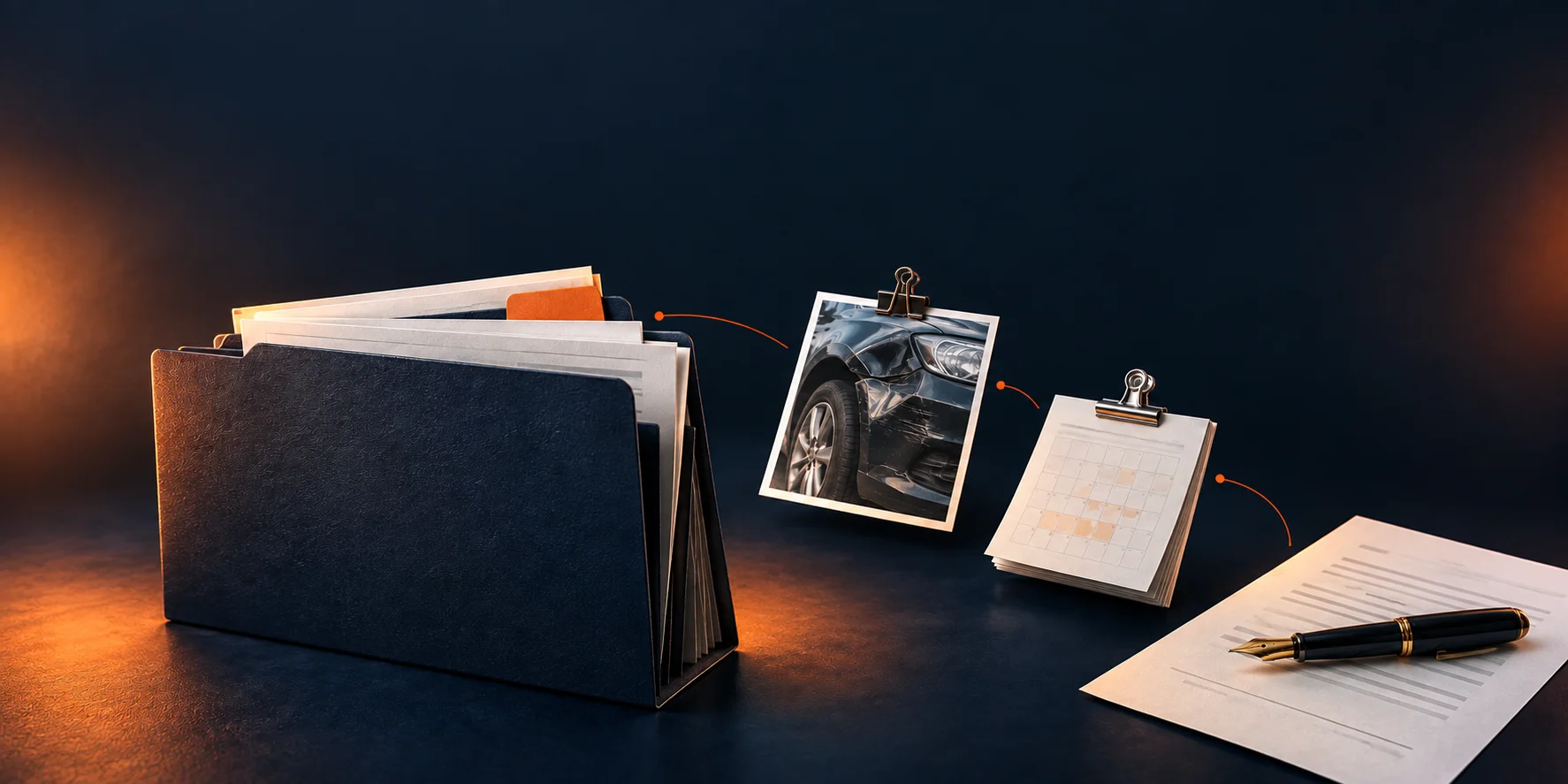
Start with your situation
Create a separate place for each insurer’s letters and messages. Include the sender’s name, claim number, date received, and any response date. Keep offers and requests in their original form rather than relying on a brief note about them.
Bring what you already have
You do not need a perfect file before asking questions. Start with the records available to you and identify what is still missing. Keep original documents and make copies for your working folder.
- The date and location, plus a short account in your own words.
- Names and contact information for people or organizations involved.
- Photographs, reports, letters, and claim numbers you already have.
- A list of appointments, time missed from work, and practical questions.
Keep a simple, dated record
Use a folder for documents and a short dated list for conversations. Record who contacted you, the organization they represent, and what was discussed. Keep the original message alongside your notes.
Separate what you remember from information someone else provided. If you are unsure about a detail, mark it as uncertain rather than filling in the gap. Bring both the record and your questions to the conversation.
Make room for your questions
Write down the questions you want answered. It can help to separate questions about immediate practical needs from questions about the process. Note any letter, appointment, or response date you have been given so it can be discussed.
- What information would help explain my situation?
- Who would handle my matter if we move forward?
- How would fees and case expenses work?
- What happens after this conversation?
General information, not advice for a particular situation. A conversation about your facts is the place to start.
